
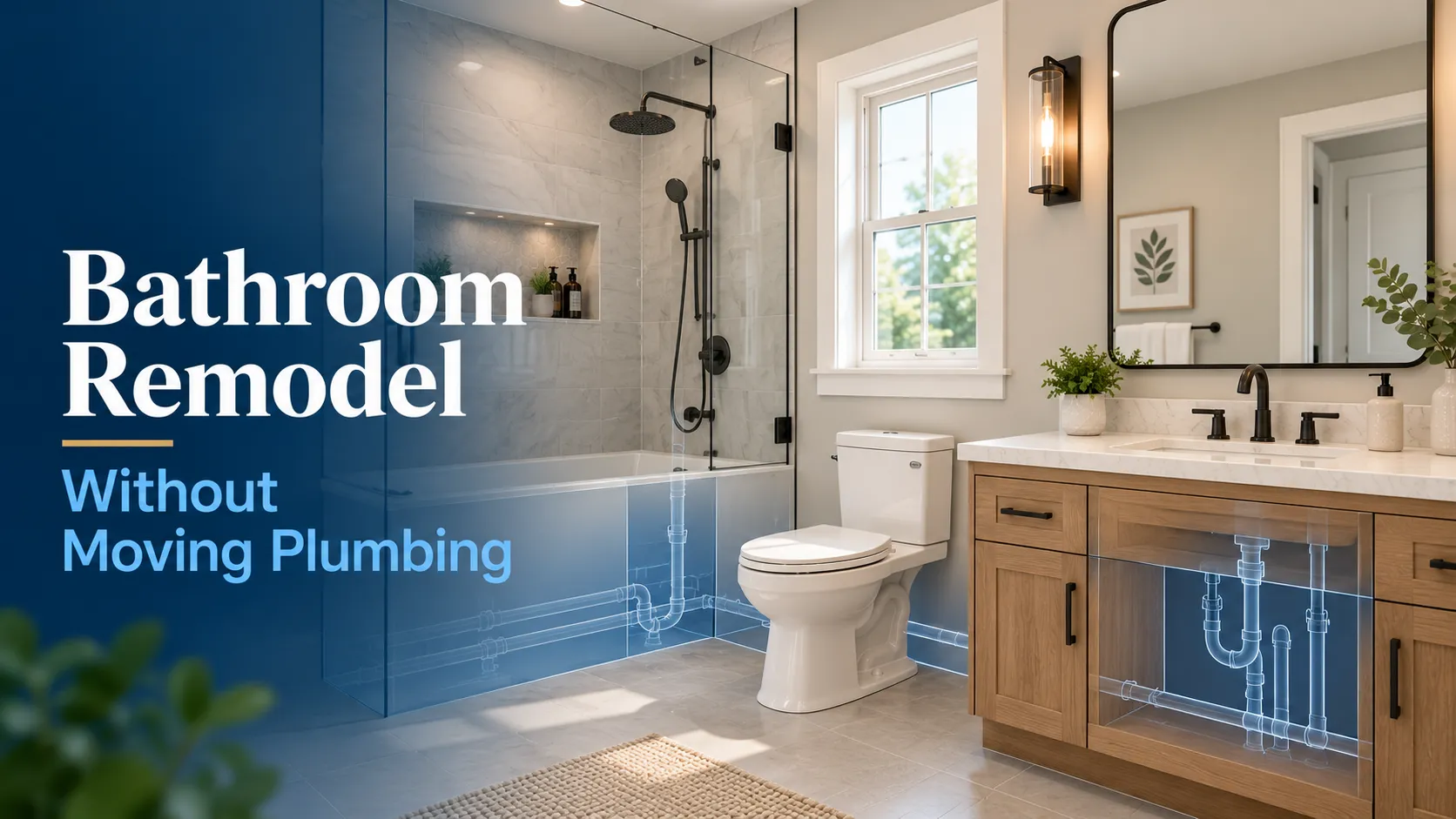
A bathroom remodel does not always require moving the toilet, shower, tub, or vanity to completely new locations. Keeping the major plumbing points where they are can still leave room for meaningful changes to fixtures, storage, lighting, flooring, tile, finishes, and parts of the overall layout.
For homeowners considering bathroom remodeling, understanding what can stay and what may need to move can make planning much easier. This guide explains what keeping the plumbing in place really means, which upgrades are still possible, how much the layout can change, and when relocating plumbing may be worth the added work.
Can You Remodel a Bathroom Without Moving Plumbing?
Yes. A bathroom can be substantially remodeled while keeping the main plumbing locations in place. Homeowners can often replace the vanity, toilet, tub or shower, tile, flooring, lighting, storage, and finishes without relocating the major supply, drain, and vent connections. The exact options depend on the existing bathroom and selected fixtures.
A bathroom remodel without moving plumbing does not mean the plumbing is left untouched. Fixtures still need to be disconnected and reconnected, and the project may include new faucets, shower valves, supply lines, drains, or other plumbing components.
The key difference is location. If the toilet, sink, tub, and shower remain in roughly the same positions, the remodel can often avoid the added work involved in rerouting major plumbing lines through walls or floors.
What Does Keeping Bathroom Plumbing in the Same Place Mean?
Keeping bathroom plumbing in the same place means the toilet, vanity, shower, and tub stay in roughly their existing locations instead of being relocated across the room. The overall plumbing layout remains similar even if individual fixtures are replaced.
That can still involve real plumbing work. A remodel may include new faucets, shower fixtures, supply lines, valves, drains, or other components. Walls or floors may also need to be opened to access existing connections or address issues discovered during renovation.
For a bathroom remodel that keeps plumbing in the same place, the goal is not to avoid plumbing work entirely. It is to avoid major relocation of the main fixture connections and the added reconstruction that can come with it.
What Can You Change Without Moving the Main Plumbing?
Keeping the major plumbing locations does not mean keeping the bathroom looking or functioning exactly the same. Many visible and practical parts of the room can still change while the main fixture positions remain similar.
- Vanity: Change the style, size, countertop, sink, or storage while working with the existing plumbing area.
- Toilet: Replace the fixture without relocating its general position.
- Shower or tub: Update tile, surrounds, fixtures, doors, or the bathing setup when the existing connections allow.
- Flooring and tile: Replace worn finishes across floors, walls, and wet areas.
- Storage: Add cabinets, shelving, niches, or a more useful vanity configuration.
- Lighting and ventilation: Improve vanity lighting, recessed fixtures, exhaust fans, or other ventilation components.
- Paint and finishes: Update wall colors, trim, mirrors, hardware, and accessories to change the overall look.
The main limitation is compatibility. A new vanity, toilet, shower system, or tub still needs to work with the available space and existing connections. Measurements and fixture specifications should be confirmed before materials are ordered.
Can You Change the Bathroom Layout Without Moving Plumbing?
Yes, some layout improvements are possible without relocating the major plumbing connections, but the amount of flexibility depends on the existing room.
Instead of moving fixtures across the bathroom, you can often improve how the space works by changing what surrounds them. A narrower vanity may create more clearance. A different door swing can reduce interference. A frameless or better-fitting shower enclosure can open up sightlines without shifting the drain.
Other useful changes can include:
- Reworking vanity storage
- Adding wall-mounted or vertical storage
- Adjusting mirrors and lighting
- Using more efficient cabinetry
- Changing shower doors or enclosure style
- Making better use of open wall space
The room can function differently even when the toilet, sink, and bathing area stay in the same general locations. The key is improving circulation and usability around the existing plumbing, rather than assuming every fixture needs to move.
How to Improve a Small Bathroom Without Moving Plumbing
In a small bathroom, keeping the major plumbing locations can help focus the remodel on making better use of the space that already exists.
A smaller vanity can free up floor area. Better storage can reduce clutter. A different shower enclosure may make the room feel less closed in, while brighter lighting and more cohesive finishes can make the space feel cleaner and more open.
Vertical storage can also help when floor space is limited, especially above or beside existing fixtures.
A small bathroom remodel without moving plumbing works best when the current fixture locations already make sense. If the toilet, vanity, or tub is the main reason the room feels cramped or awkward, keeping everything exactly where it is may limit the improvement. In that case, changing the plumbing layout may be worth considering.
When Does Moving Bathroom Plumbing Make Sense?
Keeping the plumbing in place is not always the best choice. Moving it can make sense when the existing fixture locations are the main reason the bathroom does not function well.
A layout change may be worth considering when:
- The toilet blocks a better use of the room
- The tub or shower takes up more space than it should
- A larger shower needs a different footprint
- Vanity placement creates poor clearance
- Accessibility needs require more room to move safely
- A full gut renovation creates an opportunity to solve a long-standing layout problem
Do not preserve a bad layout only to avoid plumbing changes.
At the same time, relocating plumbing should solve a clear functional problem. Moving a fixture simply because another arrangement looks better on paper can add work without delivering much practical value. The best decision is the one that improves how the bathroom is actually used.
Why Moving Plumbing Can Add Work to a Bathroom Remodel
Moving bathroom plumbing usually increases the scope because the work may extend far beyond the fixture itself.
Relocation can involve opening finished walls or floors, changing supply lines, modifying drain or vent connections, and rebuilding the surfaces afterward. The plumbing also has to coordinate with framing, waterproofing, tile, flooring, and any permit or inspection requirements that apply to the project.
That is why the answer to “is it expensive to move plumbing in a bathroom?” depends on the specific move.
The amount of added work is affected by:
- Which fixture is being relocated
- How far it needs to move
- How the home is framed
- What is accessible beneath or behind the bathroom
- Whether other finishes need to be removed and rebuilt
A small adjustment may be relatively straightforward, while a major relocation can affect several parts of the remodel.
Keeping the Existing Layout Can Simplify the Remodel
Keeping the toilet, vanity, shower, and tub in their general locations can reduce the amount of rough plumbing and reconstruction involved in a bathroom remodel. Fewer changes behind walls and floors can also make it easier to coordinate the work around the existing structure.
That does not mean the project will require no plumbing, permits, inspections, or surface repairs. The benefit is simply that fewer major systems may need to be rerouted.
Homeowners comparing both options can also review what affects a bathroom remodel timeline, since layout changes and plumbing relocation can add steps to the project.
If the existing fixture locations already work well, keeping them in place can be a practical way to focus the remodel on function, finishes, storage, and overall appearance.
What Homeowners Should Check Before Finalizing the Layout
Permit and plumbing requirements can vary from one Long Island municipality to another, so the final bathroom layout should be checked against the rules that apply to the property before work begins.
Plumbing or electrical changes may require permits, filings, licensed trades, or inspections depending on the scope and location. Homeowners should not assume that requirements in one Nassau County town apply everywhere else.
In Lynbrook, for example, the Village Building Department’s alteration permit instructions require covered plumbing work to be completed by a plumber licensed and registered with the Village. The instructions also call for construction drawings for covered alterations.
Confirming these requirements before fixtures and layouts are finalized can help avoid redesigning part of the project later.
Frequently Asked Questions
Can You Replace a Tub With a Shower Without Moving Plumbing?
Sometimes. A tub-to-shower conversion may be able to use the same general wet-area location, but that does not mean every plumbing component stays untouched. The drain, shower valve, waterproofing, and fixture connections may still need changes. The existing setup and new shower design should be evaluated before materials are selected.
Is It Better to Keep the Toilet in the Same Place During a Remodel?
Keeping the toilet in its current location can simplify the project when that position already works well. If the toilet creates poor clearance, limits accessibility, or prevents a better layout, relocating it may be worth the additional work. Function should guide the decision rather than keeping the plumbing unchanged at any cost.
What Are Common Mistakes When Remodeling Without Moving Plumbing?
Common mistakes include choosing a vanity that does not work with the existing hookups, assuming a replacement fixture will fit automatically, and ordering materials before checking measurements. Another mistake is designing around the plumbing while ignoring poor clearances or an awkward layout that the remodel was supposed to improve.
Planning a Bathroom Remodel Without Moving Plumbing
A bathroom remodel without moving plumbing can still change the room significantly through new fixtures, storage, tile, flooring, lighting, finishes, and better use of the existing space. Keeping the current plumbing layout makes the most sense when the main fixture locations already function well.
If those locations are causing the problem, relocation may be worth the added scope. When comparing a bathroom remodeling contractor, look for someone who can explain both options clearly and help determine which approach better supports the finished layout.