
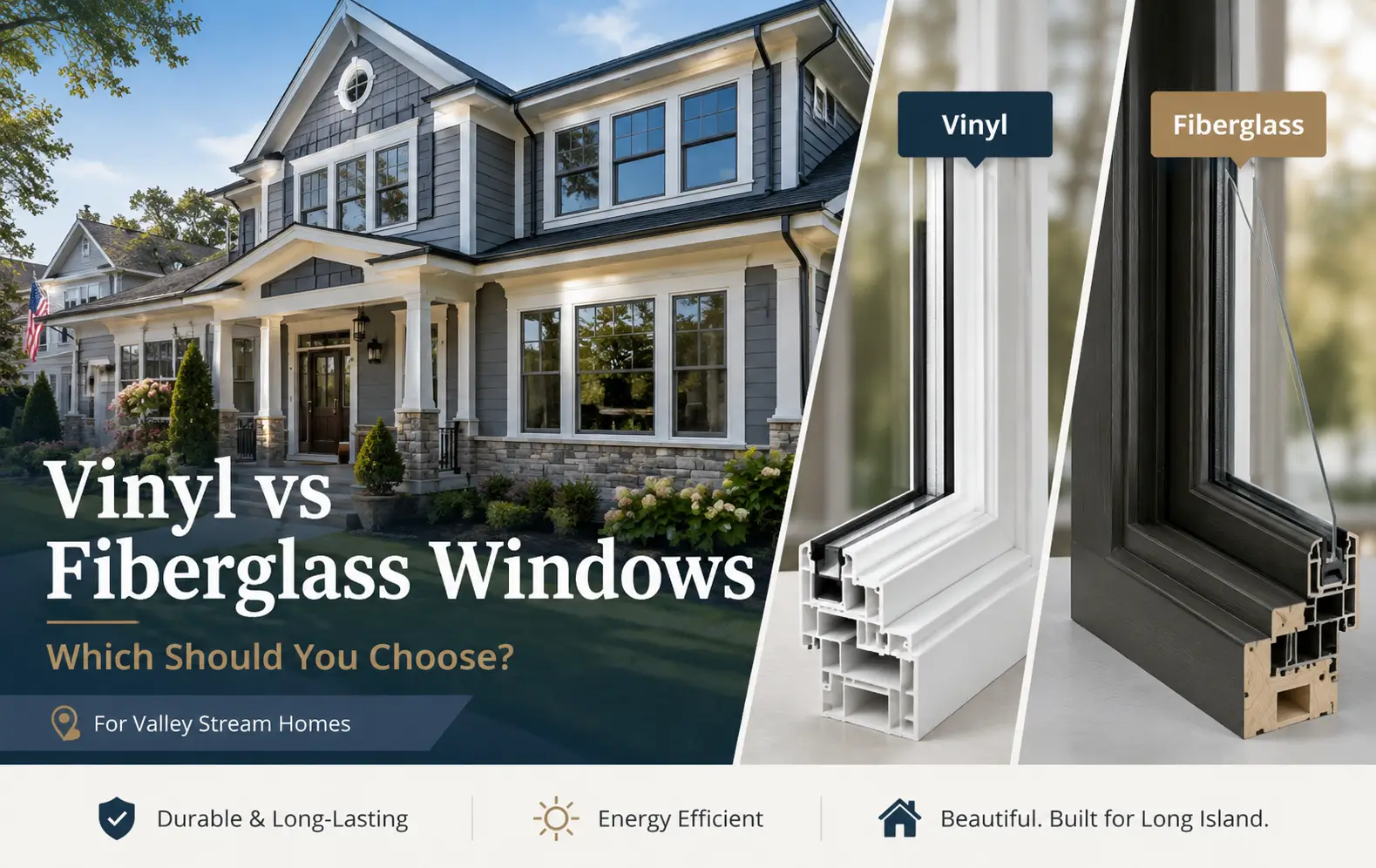
Vinyl vs fiberglass windows is a common comparison when homeowners start planning replacement windows. Both materials can work well, but neither is automatically the right choice for every home. Vinyl often appeals to homeowners who want lower maintenance and a practical budget, while fiberglass often appeals to homeowners who want a stronger frame and a slimmer look.
For homeowners comparing frame materials before a window installation in Valley Stream, the right choice depends on the home’s layout, existing openings, comfort issues, and long-term plans. Look at cost, durability, energy efficiency, maintenance, appearance, and installation quality before choosing one frame material over the other.
Vinyl vs Fiberglass Windows: Quick Answer
Vinyl windows are best for budget-friendly, low-maintenance needs. Fiberglass windows are better for strength, durability, and slimmer frames. Choose based on your budget, climate, and performance goals.
What Are Vinyl Windows?
Vinyl windows use frames made from PVC, a plastic material that does not need regular painting. Many homeowners choose vinyl for replacement windows because it is low maintenance, widely available, and often more budget-friendly than fiberglass.
When comparing vinyl vs fiberglass replacement windows, remember that vinyl quality can vary. A good vinyl window can perform well when paired with quality glass, proper sealing, and careful installation. Lower-quality vinyl may be more likely to warp, fade, or move over time. Vinyl frames may also look thicker than some fiberglass options, which can affect how much glass area the window has. These are the main vinyl windows pros and cons to understand before choosing.
What Are Fiberglass Windows?
Fiberglass windows use frames made from glass fibers and resin. This material is known for strength, rigidity, and stability, which is why homeowners often compare it with vinyl for replacement windows.
When reviewing fiberglass windows pros and cons, durability is usually the main benefit. Fiberglass frames can stay more stable over time and may allow slimmer profiles in some designs, which can create a cleaner look with more glass area. The tradeoff is price. Fiberglass often costs more than vinyl and may offer fewer style or color options than wood, depending on the product line.
Fiberglass is not less common because it is a bad material. Why fiberglass windows are not popular usually comes down to higher cost and fewer entry-level options than vinyl.
Vinyl Windows Pros and Cons
Vinyl windows pros and cons usually come down to budget, maintenance, frame thickness, and product quality. Vinyl can be a practical choice, but not every vinyl window performs the same.
Pros of Vinyl Windows
- Usually more budget-friendly than fiberglass.
- Low maintenance because the frame does not need routine painting.
- Widely available in many common replacement window styles.
- Can support good energy performance when paired with efficient glass.
- Works well for many standard home replacement projects.
Cons of Vinyl Windows
- May have thicker frame profiles than some fiberglass options.
- Can offer less rigidity than fiberglass.
- Lower-quality products may move, warp, or discolor over time.
- Color options may be more limited depending on the brand.
- Not always the best fit for homeowners who want a very slim or high-end frame look.
When window frame materials are compared, vinyl is often the practical option, but quality and installation still matter.
Fiberglass Windows Pros and Cons
Fiberglass windows pros and cons usually center on strength, long-term durability, and higher upfront cost. Fiberglass can be a strong option, but it is not always necessary for every replacement window project.
Pros of Fiberglass Windows
- Strong, rigid frame material.
- Handles expansion and contraction well in many conditions.
- Can support slimmer sightlines in some window designs.
- Lower maintenance than wood.
- A good long-term option for homeowners who plan to stay in the home.
Cons of Fiberglass Windows
- Usually it costs more than vinyl.
- May have fewer budget-friendly product options.
- Some product lines may have fewer installer options.
- Some homeowners may not see enough benefit to justify the higher price.
- Style and color choices depend heavily on the manufacturer.
Why fiberglass windows are not popular often comes down to price and availability, not poor quality.
Fiberglass vs Vinyl Windows Energy Efficiency
Fiberglass vs vinyl windows energy efficiency depends on more than the frame material. The frame matters, but glass package, air leakage, spacer system, weather sealing, and installation quality all affect how the window performs.
When window frame materials are compared, fiberglass often gets attention for its strength and stability. Still, a strong fiberglass frame with poor glass or poor sealing may underperform. A quality vinyl window with efficient glass and careful installation can also perform well.
ENERGY STAR uses climate-zone requirements for U-factor and Solar Heat Gain Coefficient, also called SHGC, when rating windows, doors, and skylights. U-factor measures how well a window insulates. SHGC measures how much solar heat passes through the glass.
In a vinyl vs fiberglass windows decision, drafts often come from poor fit, failed seals, or installation gaps, not just the frame material.
Vinyl vs Fiberglass Windows Cost and Long-Term Value
Vinyl vs fiberglass windows cost usually starts with vinyl as the lower upfront option. Fiberglass usually costs more because the frame material is stronger, more rigid, and often sits in a higher product category.
Long-term value depends on frame durability, glass quality, installation quality, maintenance needs, and how long the homeowner plans to stay in the home. The cheapest window can cost more later if it leaks air, fails early, or does not fit the opening well. The most expensive option is not always necessary for every home either.
For resale context, Brizzy Contracting and Cleaning Services’ guide to home remodeling projects that add value notes that vinyl window replacement returns around 76 percent of its cost and can also help with comfort, utility costs, and buyer confidence.
Which Window Material Works Better for Older Homes?
Older homes can make the vinyl vs fiberglass replacement windows decision more practical than cosmetic. Some homes have settled openings, aging trim, older insulation, or draft issues, so the best frame material still needs accurate measuring and careful installation.
A rigid fiberglass frame can help where strength and stability matter. Vinyl can still work well when the opening is suitable and the window is installed correctly. When window frame materials are compared, the installation plan matters as much as the material itself.
For older homes, look at flashing, sealing, insulation around the opening, and how the new trim will fit. In pre-1978 homes, work that disturbs painted surfaces may require lead-safe practices.
Vinyl vs Fiberglass Windows: How to Choose
Use the material that fits the home, not just the one that sounds better. This quick comparison keeps the decision practical.
| Situation | Better Fit | Why |
|---|---|---|
| Lower upfront budget | Vinyl | Usually more affordable and widely available |
| Long-term durability | Fiberglass | Stronger, more rigid frame material |
| Standard replacement project | Vinyl | Practical for many common home upgrades |
| Slimmer frame preference | Fiberglass | Some designs allow thinner profiles |
| Low maintenance priority | Both | Both need less upkeep than wood |
| Energy efficiency priority | Depends on full window | Glass, U-factor, SHGC, air sealing, and installation matter |
| Older home with uneven openings | Depends on inspection | Accurate fit and installation matter most |
Frequently Asked Questions
What are the disadvantages of fiberglass windows?
Fiberglass windows usually cost more than vinyl windows. They may also have fewer budget options and fewer style or color choices depending on the product line. Some homeowners may not need fiberglass if a quality vinyl window fits the home, budget, and performance goals.
What are the negatives of vinyl windows?
Vinyl windows can have thicker frames and less rigidity than fiberglass. Lower-quality vinyl products may warp, fade, discolor, or move over time. Homeowners should compare the full window, including glass, frame quality, warranty, and installation, not just the material name.
What is the best material for residential windows?
There is no single best material for every home. Vinyl is often a good fit for budget, availability, and low maintenance. Fiberglass is often better for strength, slimmer frames, and long-term durability. Wood may suit homeowners who want a traditional look and accept more upkeep.
How long do vinyl windows last compared to fiberglass?
Fiberglass windows are often chosen for longer-term durability. Vinyl windows can also last for many years when the product is high quality and installed properly. Actual lifespan depends on weather exposure, product quality, glass performance, installation, and maintenance.
Why are fiberglass windows not as popular as vinyl?
Fiberglass windows are less common mostly because they usually cost more and have fewer entry-level options. Vinyl is widely available, budget-friendly, and practical for many replacement window projects, which makes it the more common choice for homeowners.
Conclusion
Vinyl works well for homeowners who want a lower upfront cost, low maintenance, and solid everyday performance. Fiberglass works well for homeowners who want stronger frames, slimmer profiles, and long-term durability.
Energy performance depends on the full window system, not only the frame. Glass quality, sealing, fit, and installation all matter. The right choice should match the home’s existing openings, comfort problems, budget, and long-term plans.
For homeowners in Valley Stream, Brizzy Contracting and Cleaning Services can help compare practical window options before installation starts. If you are planning an upcoming window project, our team can walk through frame material, energy ratings, fit, and installation quality with you.