Choosing between a walk in shower vs bathtub is one of the biggest decisions in a bathroom remodel. Many homeowners start comparing the two when an outdated bathroom feels cramped, hard to clean, or no longer fits how the home is used.
For homeowners planning a bathroom update in Valley Stream, working with a local team for a bathroom renovation can help connect the choice to layout, ventilation, plumbing, tile, and long-term use. A walk-in shower may work better for daily use and accessibility, while a bathtub may suit families, resale plans, or anyone who still wants a soaking option.
TL;DR: Quick Answer
A walk-in shower is usually better for easier access, small bathrooms, and modern daily use. A bathtub is usually better for families with young children, soaking, and keeping a traditional full bathroom. If resale value matters, the safest choice is usually to keep at least one bathtub somewhere in the home. A shower-tub combo can be a practical middle option when you need both functions in one space.
Walk-In Shower vs Bathtub: The Main Difference
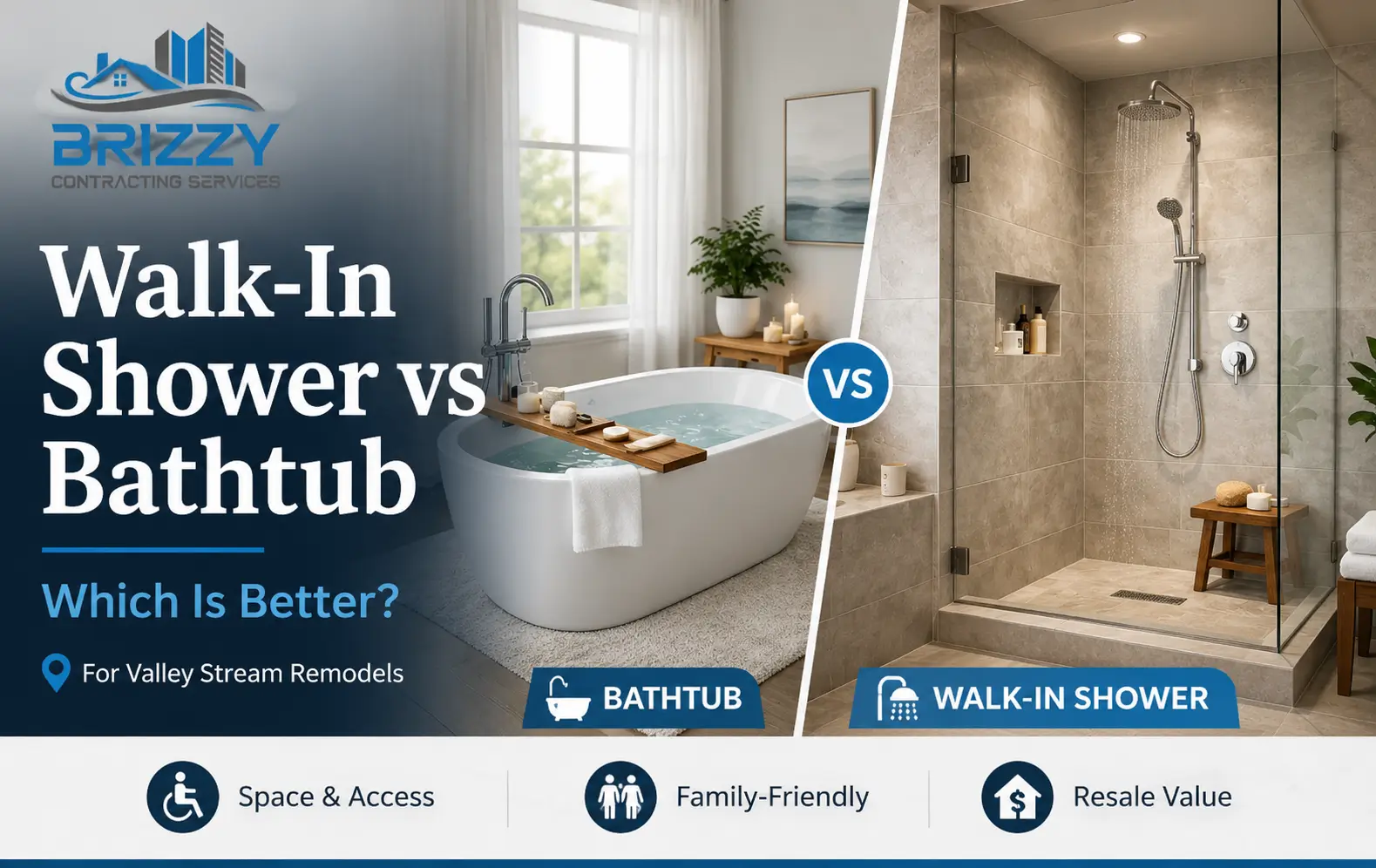
A walk-in shower and a bathtub solve different bathroom needs. A walk-in shower is designed for easy entry, quick daily use, and a more open feel, especially in a smaller bathroom. It usually removes the high tub wall, which can make the room easier to move through and easier to access.
A bathtub is designed for soaking, bathing children, and keeping the room as a traditional full bathroom. It can be useful when the home has young kids, guests, or buyers who expect at least one tub.
The walk in shower vs tub decision is not only about style. A bathtub vs shower choice affects floor space, cleaning, accessibility, resale value, and daily routines. A shower tub combo can offer both functions, but it may not give the same open feel as a dedicated walk-in shower.
Walk-In Shower Pros and Cons
When comparing walk in shower pros and cons, the biggest question is how the bathroom needs to function every day. A walk-in shower can make the space easier to use, but it also removes features some households still need.
Pros of a Walk-In Shower
- Easier to enter than a bathtub because there is no tall tub wall to step over.
- Better for older adults, mobility concerns, or aging-in-place planning.
- Can make a small bathroom feel more open, especially with glass doors.
- Works well for quick daily routines.
- Tile, niches, improved lighting, and clean lines can give the room a more modern look.
Cons of a Walk-In Shower
- Less useful for bathing young children.
- Does not offer a soaking option.
- Needs proper waterproofing and slope to help prevent water problems.
- Glass and tile still need regular cleaning.
- From a walk in shower vs tub resale value perspective, removing the only bathtub may matter to some buyers.
Bathtub Pros and Cons
A fair bathtub vs shower comparison depends on the household. A bathtub may take up more space, but it still offers practical value for families, guests, and homeowners who want a traditional full bathroom.
Pros of a Bathtub
- Useful for families with young children.
- Offers a place to soak and relax.
- Keeps the bathroom functioning as a traditional full bath.
- May help preserve broader resale appeal if it is the only tub in the home.
- A shower tub combo gives both bathing and showering function in one space.
Cons of a Bathtub
- Harder to step into, especially for older adults or anyone with balance concerns.
- Takes up more visual and physical space.
- Can make a small bathroom feel tighter.
- More awkward to clean around the tub wall, corners, and caulk lines.
- May feel outdated if the homeowner rarely or never uses it.
Walk-In Shower vs Tub Resale Value: What Homeowners Should Know
Walk in shower vs tub resale value depends on the home, not one universal rule. A walk-in shower can appeal to buyers who want a cleaner look, easier access, and a bathroom that feels more open. It can also make daily use simpler, especially in a smaller bathroom or a bathroom used mostly by adults.
A bathtub can still matter to buyers with young children, guests, or anyone who expects at least one traditional full bathroom. The biggest resale concern is removing the only bathtub in the home. If the house already has another tub, converting one bathroom to a walk-in shower is usually less risky.
The better choice depends on a few practical details:
- How many bathrooms the home has
- Whether another bathtub already exists
- Who is most likely to use the bathroom
- What buyers in the area may expect
- The quality of the remodel itself
If resale value is a major part of your decision, Brizzy Contracting and Cleaning Services’ guide to which remodeling projects add the most value gives helpful context on how bathroom updates compare with other home improvements.
Which Is Better for Small Bathrooms?
For a tight bathroom, a walk-in shower often makes the room feel more usable. It removes the bulky tub wall, opens up floor space visually, and can make daily routines easier. A small bathroom walk in shower can feel even larger when it uses clear glass instead of a curtain or heavy framed door.
The walk in shower vs tub choice still depends on how the bathroom functions. A curbless or low-threshold shower can improve access, but it needs careful waterproofing, the right floor slope, and proper drainage. Without that planning, water can move where it should not.
A bathtub may still make sense if this is the only full bathroom in the home or if children use the space often. A shower tub combo can also be the safer middle ground when the homeowner wants both functions. In older homes, the shower vs bathtub decision may also involve plumbing, framing, ventilation, and how much layout change the room can handle.
What to Think About Before Replacing a Bathtub With a Walk-In Shower
Before replacing the bathtub with a walk in shower, look at how the bathroom works now and how the home may need to work later. The first question is whether this is the only bathtub in the house. If it is, removing it can limit bathing options for children, guests, or future buyers.
Also think about who uses the bathroom every day. A walk-in shower may make more sense for easier access, faster routines, and a cleaner layout. A bathtub may still work better if the space serves a family or anyone who uses the tub often.
The bathroom remodel tub or shower decision should also include the condition of the room itself. Ventilation matters because poor airflow can lead to moisture problems. Plumbing changes, waterproofing, floor slope, tile work, and drain placement can also affect the final plan. Bathtub vs walk-in shower cost often changes based on these details, not just the fixture choice.
Before removing a tub, ask:
- Do we have another bathtub in the home?
- Will kids, guests, or older adults use this bathroom?
- Are we planning to sell in the next few years?
- Is the current tub actually used?
- Will the shower be properly waterproofed and ventilated?
Walk-In Shower, Bathtub, or Shower-Tub Combo: How to Choose
The best choice depends on who uses the bathroom, how much space you have, and whether resale value matters. A walk in shower vs bathtub decision should feel practical, not trendy. If the room needs better access and the tub rarely gets used, a walk-in shower may make sense. If the bathroom serves children or it is the only full bath, keeping a tub or choosing a shower tub combo may be smarter.
| Situation | Better Option | Why |
|---|---|---|
| Small bathroom used mostly by adults | Walk-in shower | Opens the room and improves daily access |
| Only bathroom with a tub | Bathtub or shower-tub combo | Preserves family use and resale flexibility |
| Household with young children | Bathtub or shower-tub combo | Makes bathing kids easier |
| Aging-in-place planning | Walk-in shower | Provides easier entry and safer access |
| Guest bathroom | Depends on users | Choose based on space and expected guests |
| Resale-focused remodel | Keep at least one tub if possible | Helps preserve broader buyer appeal |
For walk in shower vs tub resale value, the safest choice is usually to keep at least one bathtub somewhere in the home. For daily use, the bathtub vs shower choice should match the people who actually use the room.
Frequently Asked Questions
What are the disadvantages of a walk-in shower?
A walk-in shower does not offer a soaking option, which can matter if you like baths or want a place to relax. It is also less practical for bathing young children. If the shower is not designed well, water can splash outside the shower area or drain poorly. Glass doors and tile still need regular cleaning. The biggest long-term concern is removing the only bathtub in the home, since some buyers may still expect at least one tub.
Does a walk-in shower decrease home value?
A walk-in shower does not automatically decrease home value. The real concern is whether it replaces the only bathtub in the house. If the home has another tub, a well-designed walk-in shower can still appeal to buyers who want easier access, modern finishes, and a cleaner layout. If the home has no other bathtub, the decision needs more thought.
What is the average cost of replacing a bathtub with a walk-in shower?
The cost depends on the size of the shower, plumbing changes, waterproofing, tile, glass, fixtures, and the condition behind the existing tub. A simple replacement is usually different from a remodel that involves moving plumbing, repairing walls, changing the floor slope, or adding custom tile. The most accurate number comes after the bathroom is inspected and the full scope is clear.
Is a walk-in shower better than a bathtub?
A walk-in shower is usually better for accessibility, small bathrooms, and quick daily use. A bathtub is usually better for families with young children, soaking, and keeping a traditional full bathroom. The better option depends on who uses the room and whether another tub exists in the home.
Should every house have a bathtub?
Not every house needs multiple bathtubs, but having at least one bathtub can help with flexibility. It can be useful for children, guests, soaking, and future resale. If you want a walk-in shower, keeping one tub elsewhere in the home is often the safer choice.
Conclusion
A walk-in shower is usually better for access, space, and modern daily use. A bathtub is usually better for children, soaking, and keeping the function of a traditional full bathroom. If you need both, a shower-tub combo can be the practical middle option.
The right choice depends on the home, layout, plumbing, ventilation, and long-term plans. For bathroom updates in Valley Stream, we can help homeowners think through how the space should work before choosing one option over the other. If you are comparing options for an upcoming bathroom update, speak with a bathroom remodeler near Valley Stream who can help you think through layout, waterproofing, ventilation, and long-term use.